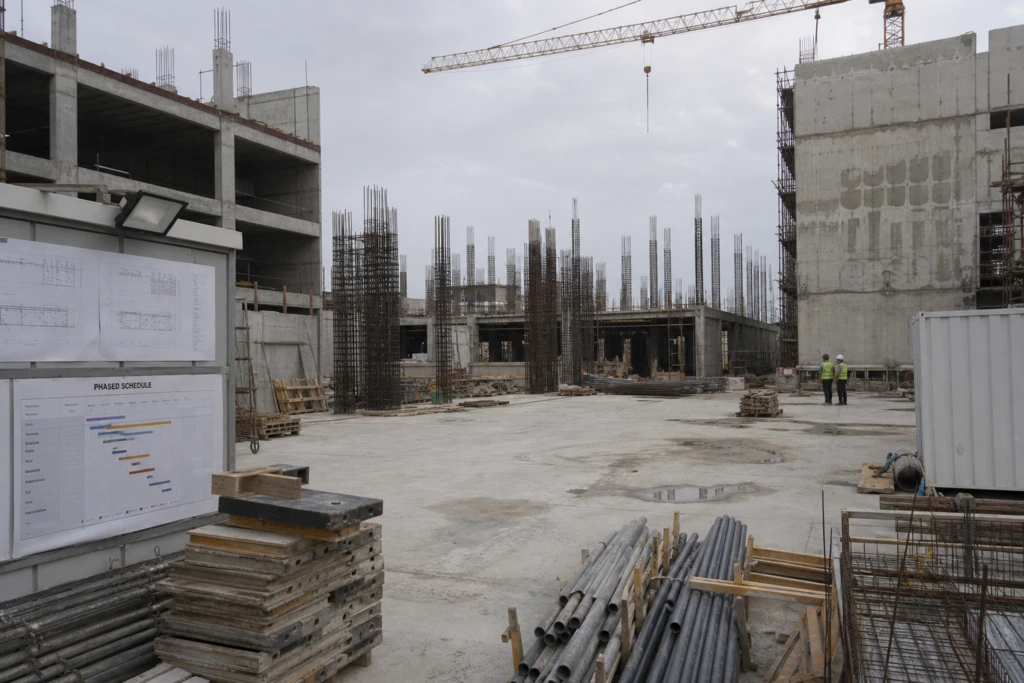
Saudi Arabia’s construction market stayed busy in 3Q 2026 even as new contract awards fell and input costs hit an annual high. Within that environment, hospital work stood out in the list of awarded projects. Contracts in the quarter included USD 208 mn for mechanical, electrical, and plumbing works at Almoosa Hospital in Al-Khobar. Another award was a USD 105.6 mn contract to finish Taiba University Hospital in Madinah, covering remaining civil works, building systems, clinical fit-outs, and medical-gas infrastructure. These hospital packages provide a clear window into how Saudi Arabia hospital construction contracts can directly translate into near-term care-capacity delivery.
Those awards landed against a broader backdrop of shifting construction dynamics. Saudi awards reached USD 24.4 bn in 3Q 2026 and USD 73.4 bn over nine months, down from USD 79.5 bn a year earlier. In 3Q, construction contracts led by value, up 7.6% year-on-year to USD 9.2 bn, while building costs were under pressure, with around 45% of firms reporting higher input prices in September and fewer than 1% seeing a decline. At the same time, the Al Rajhi Capital Saudi Construction Index reached 55.4 in August from 55.2 in July, marking a fifth straight month above the 50 contraction line, signaling expansion even as cost inflation accelerated.
Capacity Signals Behind the New Hospital Awards
Healthcare capacity indicators underline why new hospital completions matter. Invest Riyadh’s healthcare tracker notes that the MOH reorganized delivery around 22 “Health Clusters,” with 15 clusters operational, each with its own CEO, board, and accountability framework. The private sector’s share of total beds increased from 26% to 34%, tracking toward a 2030 target of 44%. The beds-per-thousand ratio is cited at 2.58 versus an OECD average of 4.3, while Riyadh is reported at 3.10 beds per thousand and the highest private-sector share at 42%. The same tracker flags lower bed ratios and less private participation in outer regions, framing regional hospital construction as part of addressing geographic equity challenges.
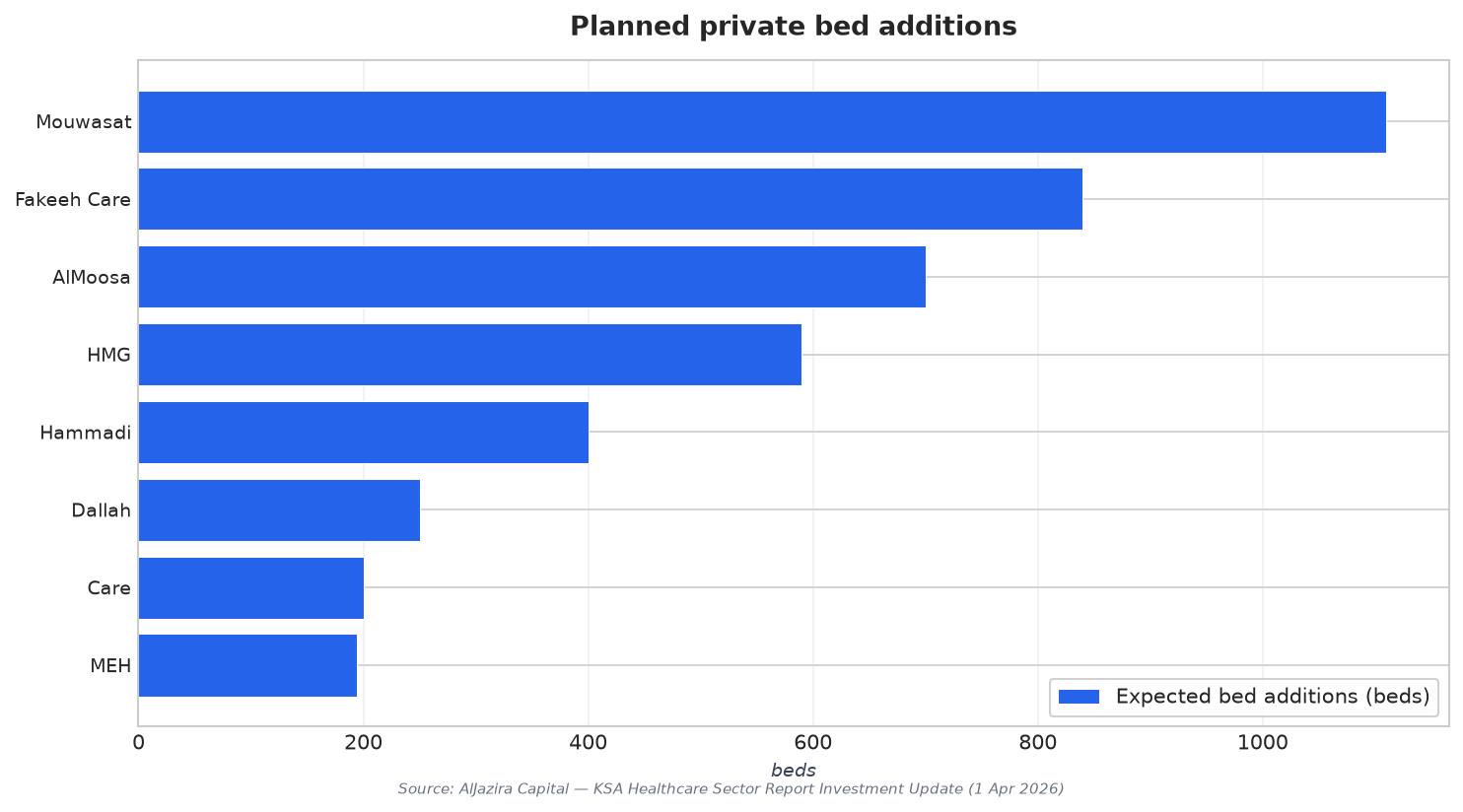
Company expansion plans add another layer to the pipeline story. An April 2026 sector report attributes expected bed additions across several operators, listing AlMoosa at 700 beds (16% of total additions) and Fakeeh Care at 840 beds (20%). The report also states that structural undersupply persists at 23.4 beds per 10,000, while competitive intensity remains elevated due to geographic concentration of capacity additions, including Riyadh accounting for about 45% of private bed capacity. In parallel, a June 2026 note says ALMOOSA is developing five medical projects, while other operators expand medical centers across cities including Riyadh, Qassim, KAEC, Khobar, Dubai, and Jeddah.
Public-system trends help explain the pressure on both capacity and project delivery. A longitudinal study of the Saudi Ministry of Health (MoH) indicators reports that the Kingdom’s mid-year population estimate increased from 30.95 million in 2016 to 35.30 million in 2024 (+14.0%). Over the same period, the harmonized MoH series recorded increases of 12.1% in beds and 5.8% in hospitals, alongside a 60.4% rise in inpatient admissions and a 15.6% increase in hospital outpatient visits. Against that utilization trend, the hospital awards at Almoosa and Taiba University Hospital show how targeted construction packages can move projects from pipeline to operational capacity, even when the wider construction sector faces cost headwinds.
Which hospital awards stood out in Saudi Arabia’s 3Q 2026 construction activity?
What do the latest indicators say about bed capacity and private-sector participation?
How is Saudi Arabia organizing healthcare delivery alongside new hospital projects?
What factors make Saudi Arabia hospital construction contracts especially important right now?
What are the construction-market conditions around these hospital packages?