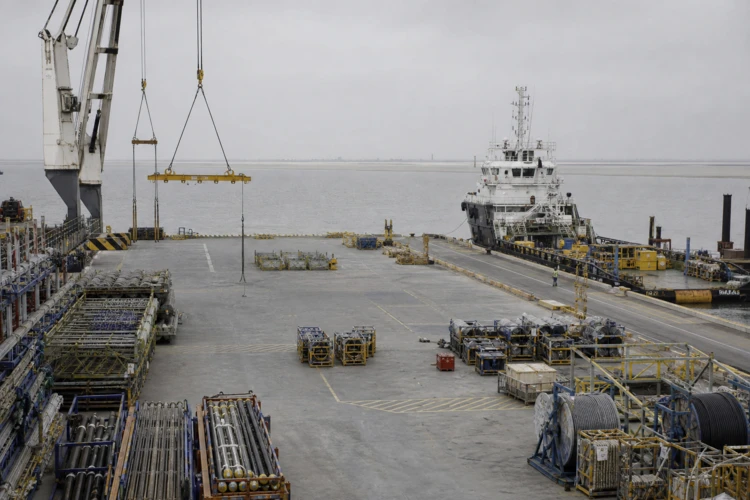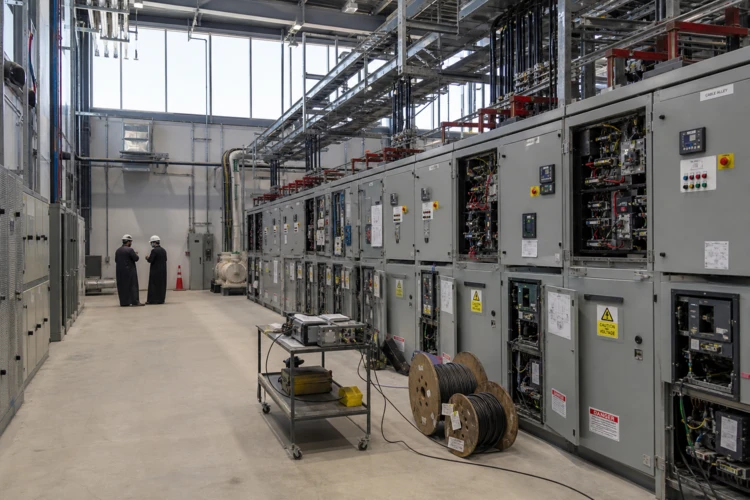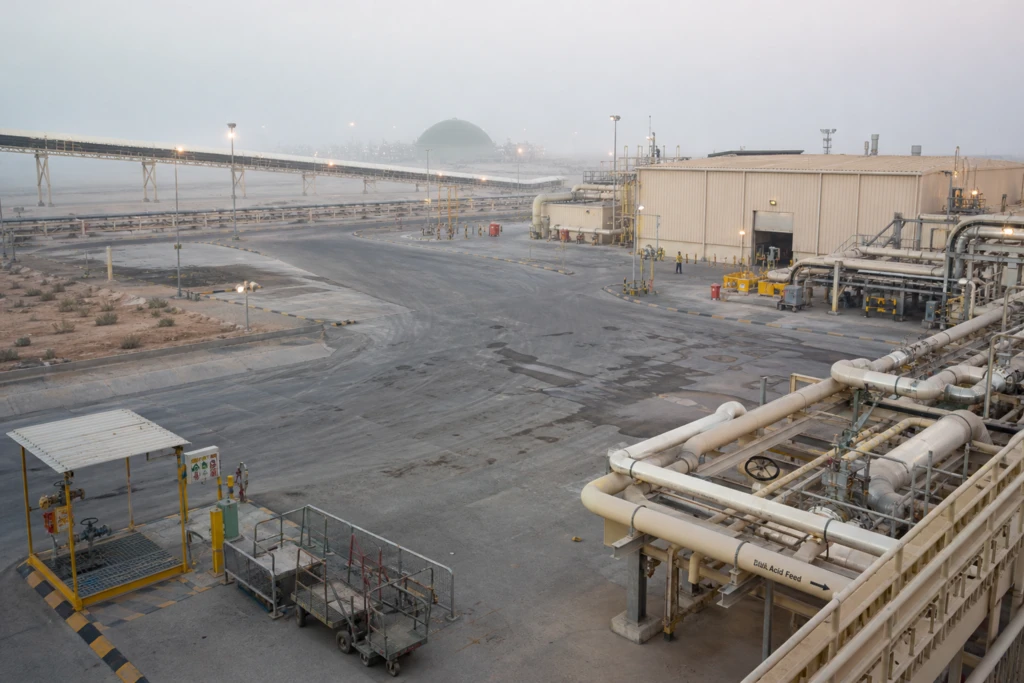
Maaden is moving toward a new phase in its phosphate buildout as the Phosphate 3 project advances toward first-phase output. Company materials referenced in FY2025 coverage expect the first-phase additional production in 2027, and Fitch sees about 1.5 Mt at run rate from that year. The same direction of travel shows up in capacity framing: Maaden’s phosphate fertilizer capacity is described as rising from a current 6 million t/y to 7.5 million t/y in 2026, and then exceeding 9 million t/y once Phosphate 3 is fully complete. This expansion story matters because Maaden already demonstrated operational stretch, posting record FY2025 DAP production of 6.723 Mt, with DAP sales of 6.749 Mt and ammonia output of 3.008 Mt.
The prize is scale, but the constraint is often what sits before the reactor. Maaden has pointed directly at sulphur and ammonia-linked costs as key margin drivers, citing higher molten-sulphur prices and an ammonia turnaround in Q2 2025. That sensitivity has turned into an operational risk in 2026. IFPRI reported that the continued closure of the Strait of Hormuz curtailed exports of sulfur, an important feedstock in phosphate fertilizer production, and said shortages continued to constrain production and trade. IFPRI also noted that Maaden cut its 2026 phosphate production guidance and withdrew its ammonia guidance, citing sulfur supply and logistics disruptions.
Why Logistics and Sulphur Pricing Now Matter More Than Nameplate Capacity
Logistics disruptions have been severe enough to reset what “reliable supply” means for Gulf-linked fertilizer trade. WTO analysis cited in a Saudi export stress-test overview indicates outbound fertilizer-related shipments through the Strait of Hormuz to destinations outside the Persian Gulf came to a standstill once the conflict began in February 2026 and remained close to zero, with a stable resumption still uncertain. In the same overview, one industry estimate suggested up to 30% of globally traded fertilizer products, or around 16 million tonnes annually of nitrogenous, phosphates, and sulphur products, transit through Hormuz, and that the effective closure left 3–4 million tonnes per month unable to reach markets. IFPRI adds that the Gulf States (principally Saudi Arabia) account for about 20% of global phosphate exports, so any prolonged transport bottleneck can quickly become a production-and-sales constraint.
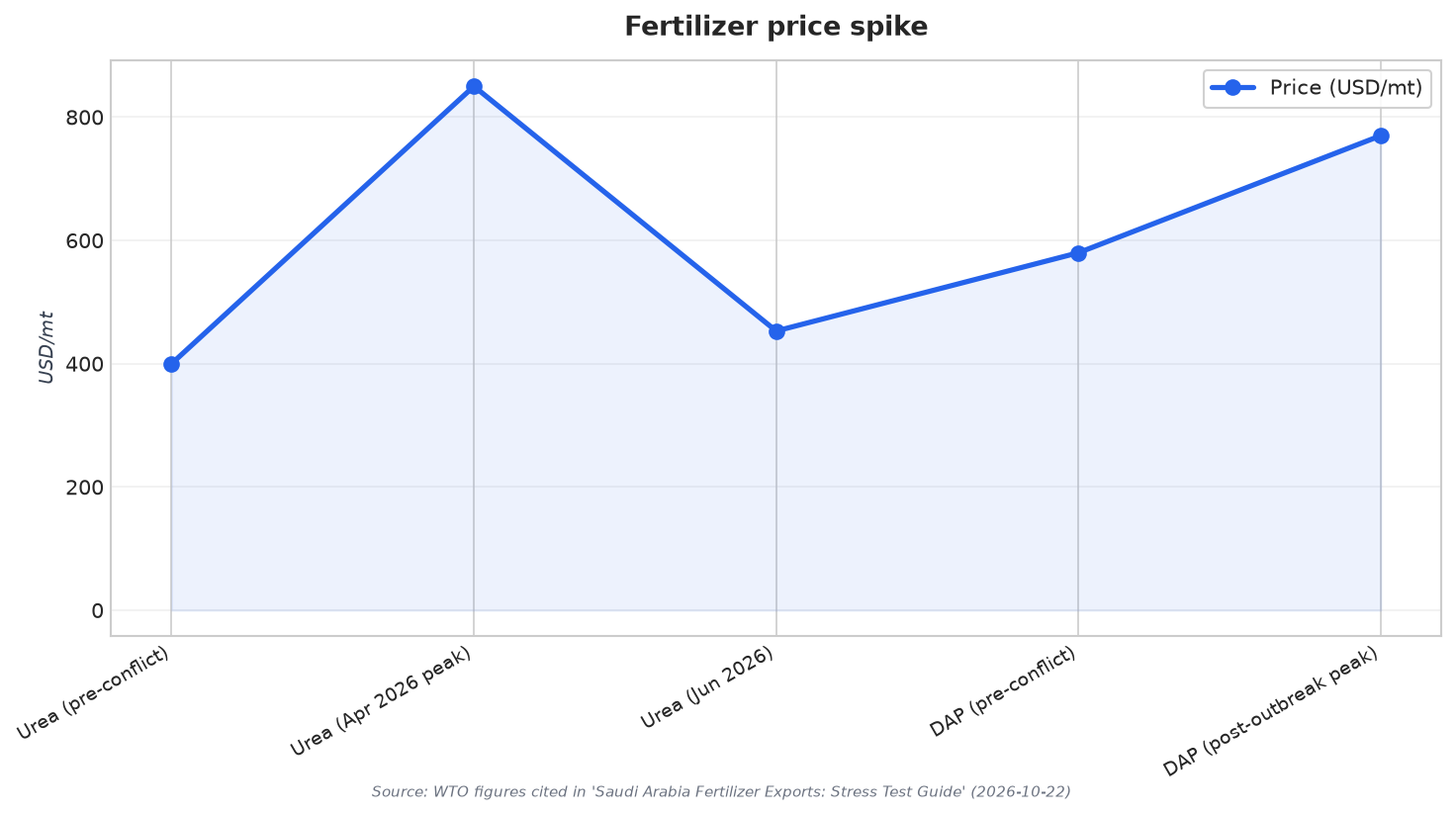
Sulphur pricing has also been volatile, tightening the economics of phosphoric acid and DAP conversion just as new capacity nears start-up. A Middle East industry report states that in 2026 the Strait of Hormuz conflict disrupted about half of global sulfur trade, with sulfur prices rising from US$150–180/t a year earlier to US$815–820/t FOB Middle East, and Brazilian CFR prices even reaching US$1,200/t. Another market note in the export stress-test coverage said granular sulphur FOB Arabian Gulf jumped from 80–90 dollars per tonne to 160 dollars per tonne. On the fertilizer side, the same stress-test summary cites WTO figures showing DAP prices climbed from approximately US$580/mt to around US$770/mt after the outbreak, while IFPRI reported phosphate fertilizer prices rose about 30% after the start of the Iran war and remained at those levels since mid-May.
For Saudi output, the risk picture is therefore not only about mines and plants, but about feedstocks and routes. IFPRI reported global phosphate exports (in phosphorous equivalents) were down more than 9% in January–June 2026 versus the same period in 2025, while Saudi Arabian exports were off 22%. In parallel, Maaden’s phosphate segment has become more financially prominent, with revenue rising to SAR20.773B in FY2025 from SAR17.766B in FY2024, and Fitch expecting phosphates to make up about 60% of Maaden’s consolidated EBITDA over 2025–2028 (while also expecting prices to moderate). As Maaden Phosphate 3 approaches first-phase output, sulphur procurement resilience and alternative logistics paths may matter as much as commissioning milestones for protecting volume, pricing realization, and margins.
When is the first-phase additional production expected from Maaden Phosphate 3?
How large is Maaden’s current DAP output and capacity context?
Why is sulphur a key risk for Saudi phosphate fertiliser output?
What does the Strait of Hormuz disruption imply for fertilizer trade flows?
How did phosphate fertilizer prices respond during the 2026 disruption?