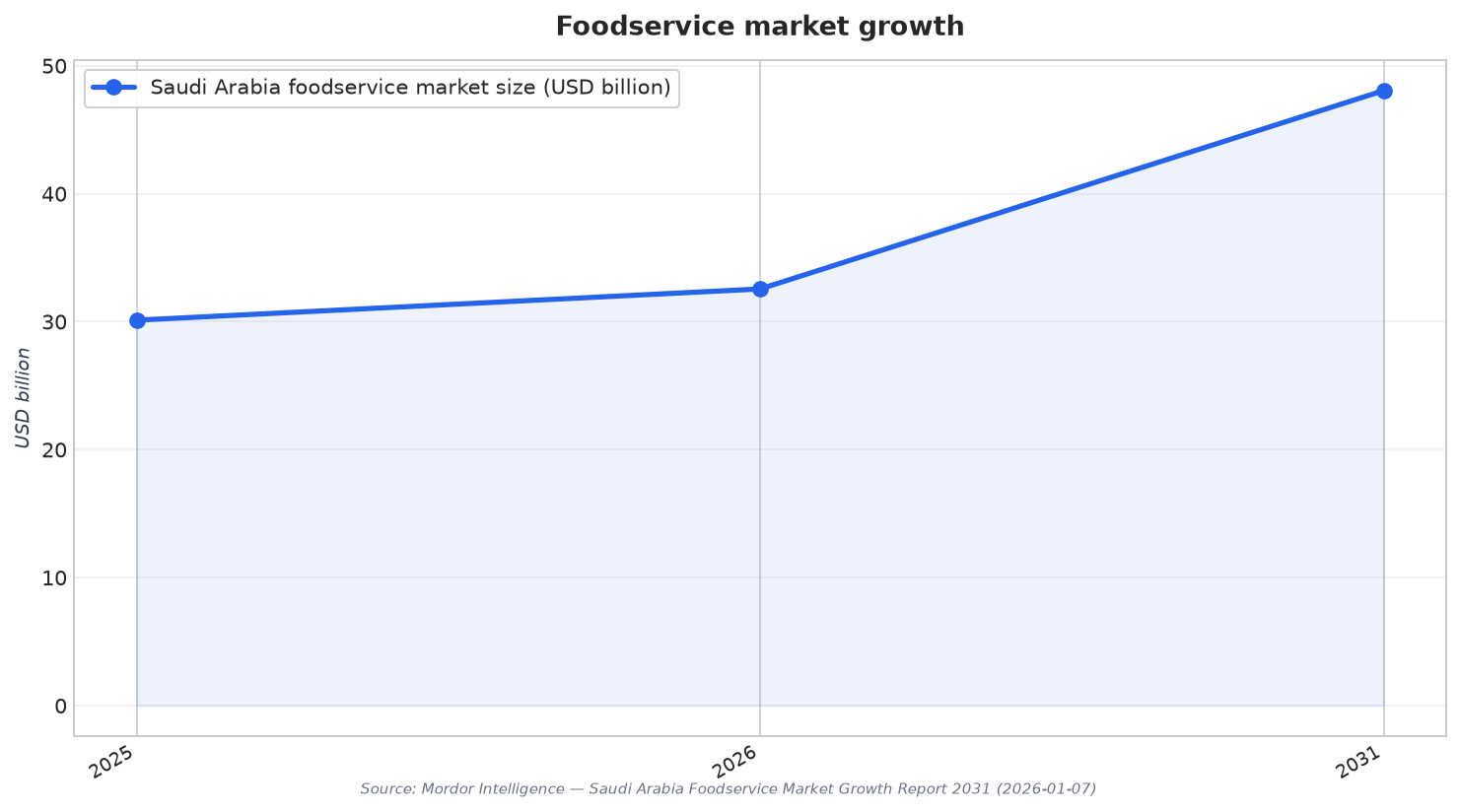
Demand fundamentals remain strong across food retail and out-of-home dining, but the picture is mixed. Saudi Arabia’s food retail market value reached USD 26.6 billion in 2023, and the country had 36.3 million residents in 2023, with 86.6% living in urban areas. The median age was 30.0 years in 2023, and 37.0% of consumers were aged 25–34, a profile associated with frequent convenience-led consumption. On foodservice sizing, one estimate places the Saudi food service sector at USD 30 billion and projects growth by an additional USD 15. Separate market forecasts point to expansion from USD 30.12 billion in 2025 to USD 32.56 billion in 2026, reaching USD 48.06 billion by 2031 at an 8.11% CAGR. Another forecast values the market at USD 28.81 billion in 2025 and projects USD 30.54 billion in 2026 and USD 48.68 billion by 2034 at a 6% CAGR.
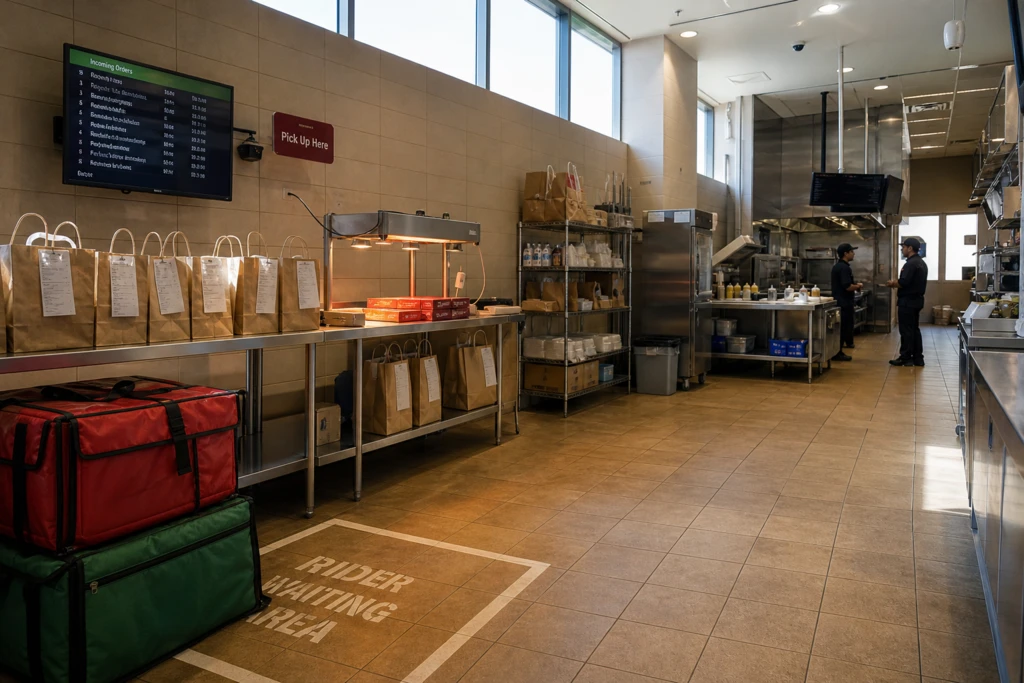
In the Saudi Arabia restaurant market, growth is closely tied to how people discover, order, and pay for food. Online food delivery penetration reached 42% in 2023, while 88% of consumers use food delivery apps at least once a week and 50% prefer ordering through mobile apps. Discovery also happens digitally: 85% of households use social media to find new restaurant recommendations, and 70% check online reviews before visiting a new venue. In Riyadh, social media influencers drive 25% of new restaurant visits. These behaviors support formats designed for convenience and throughput, including established fast-food chains where drive-thru sales account for 60% of total revenue, and where late-night dining after 10 PM contributes 20% of total daily revenue for QSRs.
Where Growth Still Looks Strong
Cafés and premium experiences are still finding room to expand, especially when tied to major events and new concepts. Afternoon tea and coffee sessions account for 30% of café revenue in major cities. On the higher end, spending on luxury dining rose by 18% during the Riyadh Season, and 10 new international Michelin-starred chefs opened outlets in Saudi Arabia in 2023. International cuisine is not slowing either, with spending on international cuisine brands up 12% in 2023. New supply is also coming through: the number of new restaurant openings in 2023 increased by 15% compared to 2022, and franchising represents 40% of the total brand landscape in the sector.
The squeeze shows up in costs, supply exposure, and rising standards around health and sustainability. Saudi Arabia’s food inflation rate averaged 3.5% in 2022. At the same time, food imports were USD 41.4 billion in 2022, and in 2023 “food and live animals” made up 4.0% of total merchandise imports while agricultural products were 15.8%, highlighting external reliance. In operations, diners increasingly want better-for-you menus: 60% of consumers are increasingly looking for healthy options, and healthy food demand increased by 30% among consumers aged 18–35. Sustainability expectations also tighten execution, with 45% of consumers prioritizing sustainable packaging when buying food and 75% of Saudi Gen Z valuing sustainable packaging in food delivery. Meanwhile, Saudi Arabia has an estimated 406 kg of food waste per person, adding pressure to manage inventory and portions more precisely.
Tourism and seasonal peaks can lift volumes, but they also raise the operational bar. Saudi Arabia hosted 34.0 million foreign tourist arrivals in 2023 and recorded USD 33.1 billion in international tourism receipts, supporting foodservice throughput in key hubs. Consumer patterns also favor peak-driven revenue: seasonal promotions during Ramadan and Eid see a 40% spike in average order value, and group dining parties of four or more make up 65% of full-service restaurant bookings. Yet operators must balance these tailwinds with customer trade-offs: average spend per meal in full-service restaurants is USD 25, while 55% of consumers prioritize high-quality ingredients over price. The opportunity is real, but so is the need for disciplined sourcing, menu engineering, and digital execution.
How fast is the Saudi Arabia restaurant market expected to grow?
How important are delivery apps for restaurants in Saudi Arabia?
What is pushing café growth in major Saudi cities?
Where do cost and supply pressures come from for foodservice operators?
What menu and packaging expectations are rising among diners?