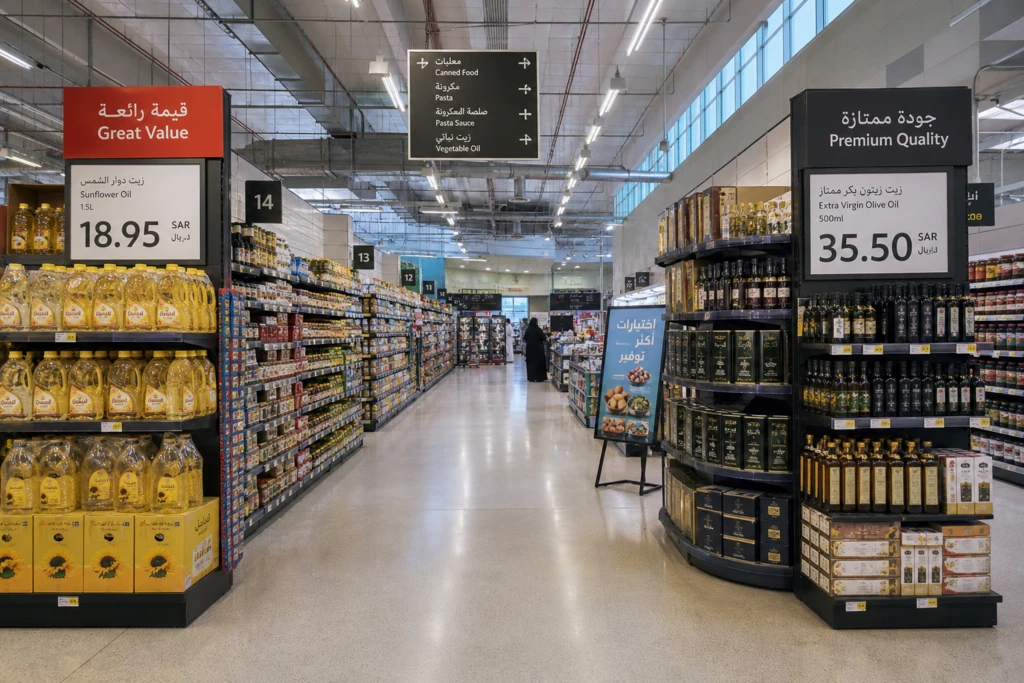
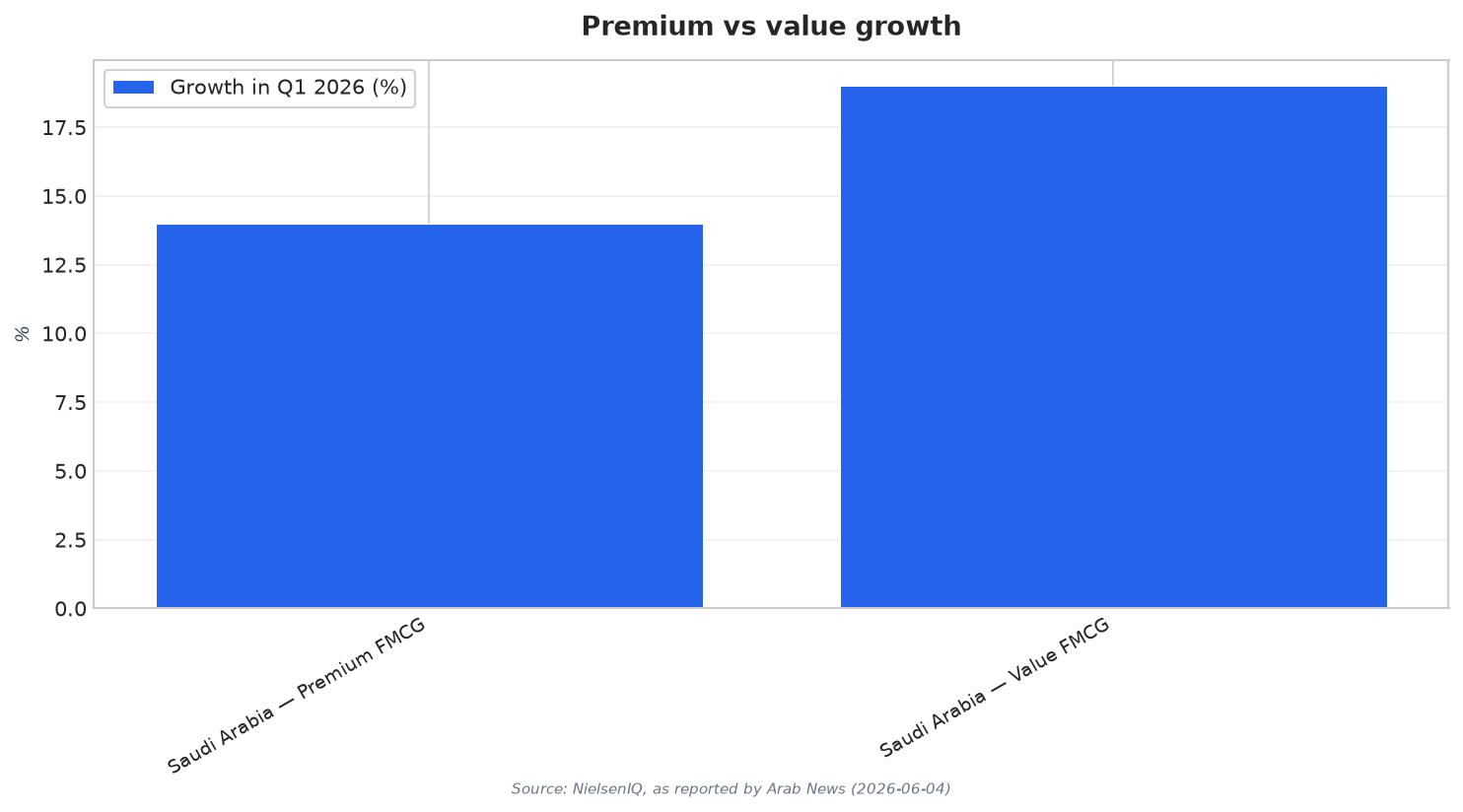
The Saudi Arabia value-seeking consumer is becoming harder to predict with old “trade down” assumptions. NielsenIQ’s State of the Nation reporting across the UAE and Saudi Arabia describes shoppers as deliberate and channel-agnostic, spreading spend across retail formats and price tiers. In FMCG, this shows up as simultaneous growth at both ends of the price spectrum in the first quarter of 2026: premium FMCG grew 14% in Saudi Arabia, while value FMCG grew 19%. That split signals households are making category-by-category decisions, looking for savings in some baskets while still paying more in others when the product feels worth it.
Channel switching is a key part of how consumers search for better value. In Saudi Arabia, NielsenIQ reported that e-commerce revenues increased by 55% year on year in Q1 2026. In a separate NielsenIQ Q2 2026 view reported by Communicate, Saudi Arabia’s FMCG e-commerce channel grew 56.7%, and its value share rose from 5.0% to 7.9%. These shifts matter because they make price comparison and deal-hunting easier, and they also change what “availability” means for brands that once relied mainly on shelf presence. NielsenIQ also flags rising price sensitivity and more shoppers “shopping around,” a dynamic that can weaken default loyalty.
Why the Middle Is Getting Squeezed
As shoppers split their baskets between saving and splurging, mainstream price points face pressure. Campaign Middle East, citing NielsenIQ research, says shoppers in Saudi Arabia and the UAE are moving spending away from mainstream-priced FMCG toward value and premium alternatives. The same report adds that around seven in 10 shoppers in both markets would rather save money if a product is not clearly better, while roughly two-thirds prefer something clearly premium when spending more. It also notes that six in 10 shoppers need a clear reason to choose mid-range products. The implication is simple: brands must justify the price, either by proving savings or by proving superiority.
This behavior is playing out alongside rising choice intensity on shelf. In Q1 2026, the number of active FMCG brands in Saudi Arabia rose 8% to more than 11,000, according to NielsenIQ reporting carried by Communicate Online. In technology and durables (T&D), active brands increased by more than 18% across both Saudi Arabia and the UAE, with each country recording more than 40,000 active SKUs. When choice expands this quickly, the consumer’s definition of value becomes more personal and less predictable, with promotions, channel convenience, and perceived quality all influencing what wins the basket in a given moment.
Even with fast digital growth, Saudi purchasing remains grounded in physical retail. BCG’s 2026 Saudi consumer research says online discovery consistently outpaces online purchasing, and 85% of consumers describe a physical store as important or essential to their decision. That fits with a “research anywhere, buy where it suits” mindset, in which consumers compare online and still want in-store confidence before paying. For brands, the competitive job is to be findable in digital discovery while also delivering a clear value story at the shelf, because the modern Saudi shopper can move across channels, brands, and price tiers without feeling inconsistent.
What defines a value-seeking shopper in Saudi Arabia today?
How fast is e-commerce growing for Saudi shoppers?
Are Saudi consumers abandoning physical stores as they shop online more?
Why are mid-priced brands under pressure in Saudi Arabia?
How intense is brand and SKU competition in Saudi retail right now?