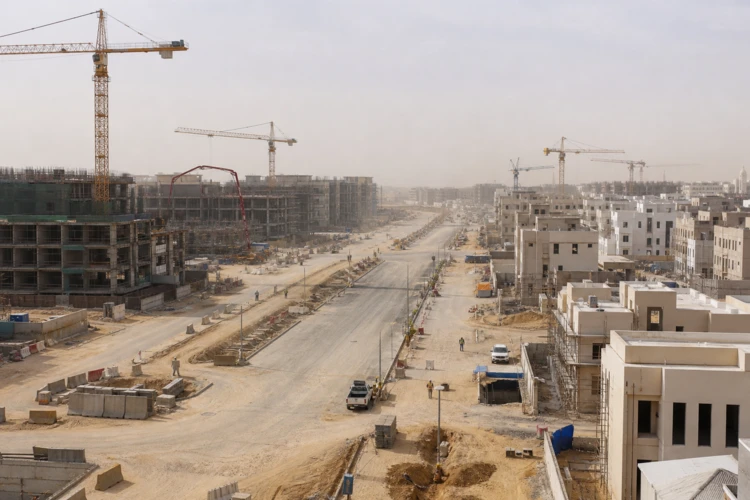
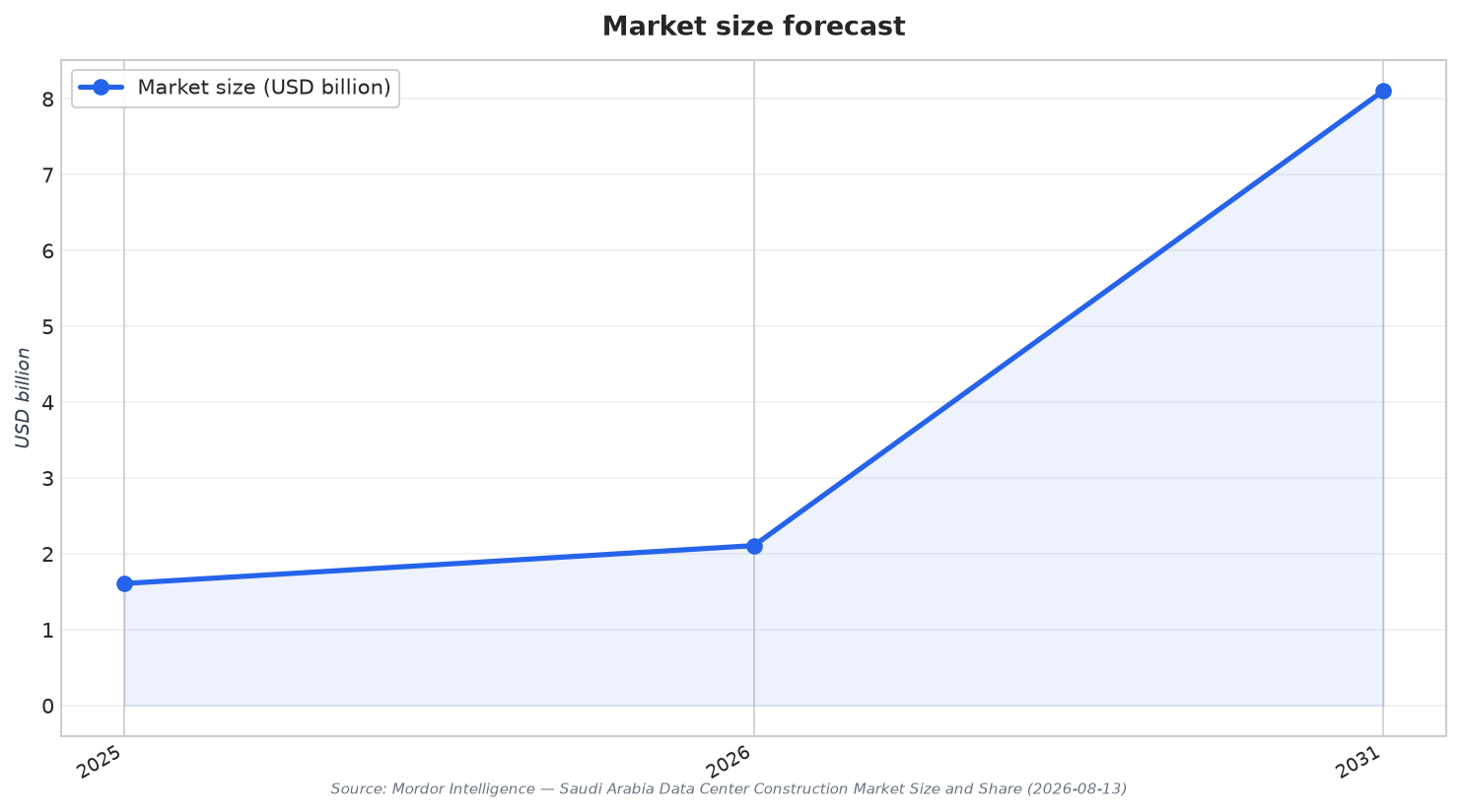
Saudi Arabia data center construction is being pulled forward by policy, funding, and rising demand for in-country hosting. Mordor Intelligence values the Kingdom’s data center construction market at USD 1.61 billion in 2025 and estimates growth from USD 2.11 billion in 2026 to USD 8.11 billion by 2031, at a 30.91% CAGR (2026–2031). The same source links momentum to Vision 2030 incentives, mandatory data-sovereignty rules, and rapid submarine-cable additions. It also notes that approvals can be cut to six months under accelerated permit pathways tied to Vision 2030’s USD 100 billion allocation to technology.
For delivery partners, the pipeline is not just a single-country story but part of a broader regional surge. MEED’s GCC-focused project view tracks 174+ major active and planned data centre projects across Saudi Arabia, the UAE, Qatar, Oman, Kuwait and Bahrain, with a combined value of more than $93bn. That regional crowding matters to Saudi-based contractors because power availability, grid constraints, cooling performance, sustainability requirements, and delivery capacity can determine which announcements reach execution. In practice, this increases the premium on partners that can qualify fast, package scope clearly, and deliver repeatable performance under tight schedules.
Where Contractors and Suppliers Can Win First
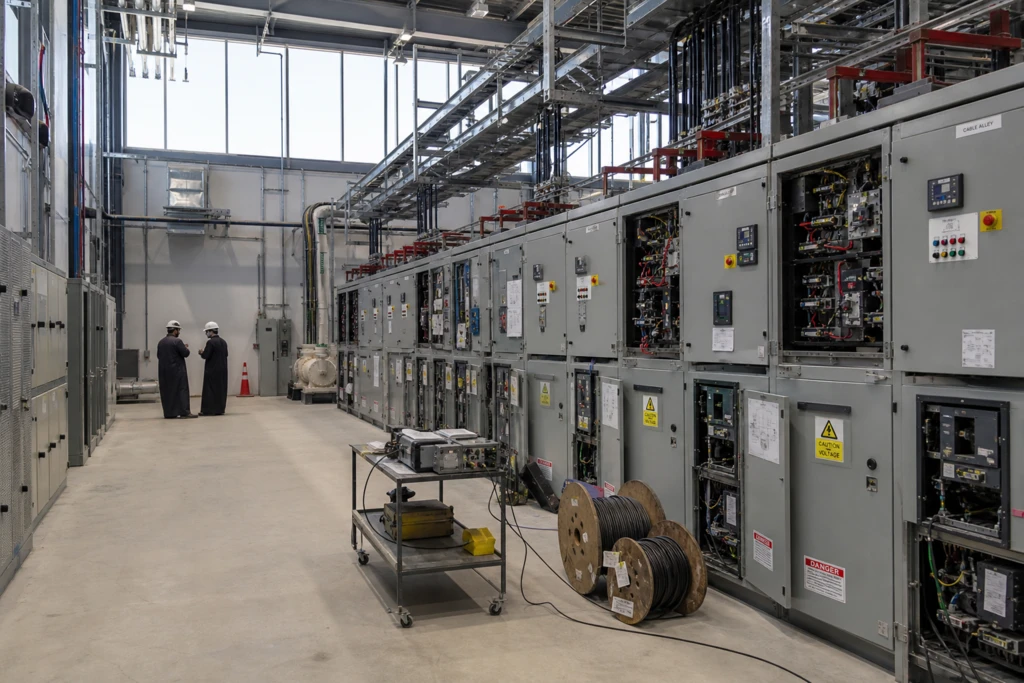
Procurement gravity in Saudi builds sits heavily in electrical and mechanical systems, and the market shares highlight where budget is concentrated. Mordor Intelligence reports that power-backup systems held 52.90% of the Saudi market size in 2025, while power-distribution solutions are forecast to advance at a 31.12% CAGR (2026–2031). On the mechanical side, cooling systems accounted for 41.30% of spending in 2025. These splits point to immediate opportunities for OEMs, specialist subcontractors, and integrators that can deliver UPS and generator trains, switchgear and distribution packages, and cooling plants with strong commissioning support.
Tiering and business models also shape packaging strategy. Tier 3 commanded 53.20% of Saudi market share in 2025, yet Tier 4 is projected to expand at a 31.34% CAGR through 2031, indicating growing demand for higher-resilience builds. By data-centre type, colocation held 56.40% revenue share in 2025, while self-build hyperscalers show the highest growth at a 31.75% CAGR. That mix favors contractors that can handle both: standardized, fast-turn colocation modules and bespoke, power-dense hyperscale campuses with robust interface management across civil, MEP, and controls.
Announced programs and capacity signals help suppliers prioritize who is buying and what may be bought next. Expert Market Research highlights projects and commitments including a DataVolt-NEOM USD 5 billion Oxagon net-zero campus, an AWS USD 5.3 billion Saudi region investment, and analysis of USD 15 billion-plus hyperscaler AI infrastructure commitments, alongside a 1.5 GW national data center capacity target by 2030. SaudiConstructionConsulting also cites announcements such as MIS adding 112 MW with Saudi Data Centre Fund 1 (July 2025), and Pure Data Centers and Dune Vaults announcing hyperscale campuses with IT capacity exceeding 100 MW (November 2024). For contractors, these signals translate into repeatable bid targets: power and cooling blocks, phased fit-outs, and rapid commissioning plans.
What is driving demand for data centres to be built inside Saudi Arabia?
Which scopes account for the largest spending in Saudi projects?
How do Tier 3 and Tier 4 trends affect contractor opportunities?
What kinds of buyers are shaping Saudi Arabia’s build pipeline?
How fast is Saudi Arabia data center construction projected to grow?